


Sumac
Rhus Coriaria
Volumes and net weight: 50ml / 40g / 1.41,70 oz
€250.00/kg
Origin: Iran
Description:
Sumac is a spice that holds an important place in Middle Eastern cuisine. It is a spice that comes from the sumac tree, from its scientific name Rhus coriaria, and not from the poisonous sumac which is a poison to it. In fact, most varieties of sumac are poisonous.
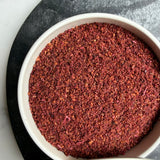
The term sumac means red like the characteristic color of the spice. It comes from the berries of the tree where it grows, which are crushed and then dried.
Iranian tradition holds that for the New Year, every household brings to its festive table the seven symbolic elements necessary to have a good year, and sumac is a symbol of a good life. Like mahleb, it is a flagship spice in Turkey, Lebanon, Syria, Armenia, Iran and also Greece.
Its history is quite mysterious, but it seems that it was known by the ancient Romans and would have been used in the Middle Ages.
On the other hand, sumac vinegar (another type of sumac) was used as a dye, notably in tanneries. It is thought that during Antiquity, the Romans and Greeks used this spice to replace vinegar and lemon.
Usage tips:
Essential for the preparation of the famous Zaatar blend, it is used to flavor and salt many dishes (suitable for a salt-free diet). It loves meats such as lamb, veal, beef but also seafood and fish. Its acidity can replace lime, kaffir lime or yuzu. It will flavor eggs, stuffings, breads. Mix it with yogurt and herbs to make a delicious sauce with an oriental touch.